Posted on

Water Damaged Ceiling Repairs

Water Damaged Ceiling Repairs are a critical aspect of maintaining the structural integrity and aesthetic appeal of any building. Whether it’s a residential home or a commercial property, the impact of water damage on ceilings can be both unsightly and hazardous. Dealing with such damage often involves not just repairing the affected area but also may require the complete replacement of ceiling tiles. Furthermore, when new areas are being refurbished, or existing tiles have aged or been damaged, installing new ceiling tiles becomes necessary. This process not only rejuvenates the look of a room but also ensures the safety and durability of the ceiling structure.

Water damage to ceilings can be a significant issue in any building, often resulting from leaks, flooding, or even humidity. When water penetrates the ceiling, it can cause unsightly stains, peeling paint, and, in more severe cases, structural damage. The moisture trapped in the ceiling can lead to the growth of mold and mildew, posing health risks and further deteriorating the integrity of the material. Whether it’s a small leak or extensive water damage, it’s crucial to address these issues promptly to prevent further deterioration and costly repairs.

“Mr. Repair It” specializes in repairing and restoring water-damaged ceilings. Their team of experts is skilled in identifying the source of the leak and fixing it to prevent future issues. They can efficiently replace damaged ceiling tiles, ensuring a seamless and aesthetically pleasing finish. Choosing “Mr. Repair It” for your ceiling repairs ensures quality workmanship and a durable solution to your water damage problems. Their prompt and professional service can help restore your ceiling to its original state, ensuring the safety and comfort of your space.
Posted on

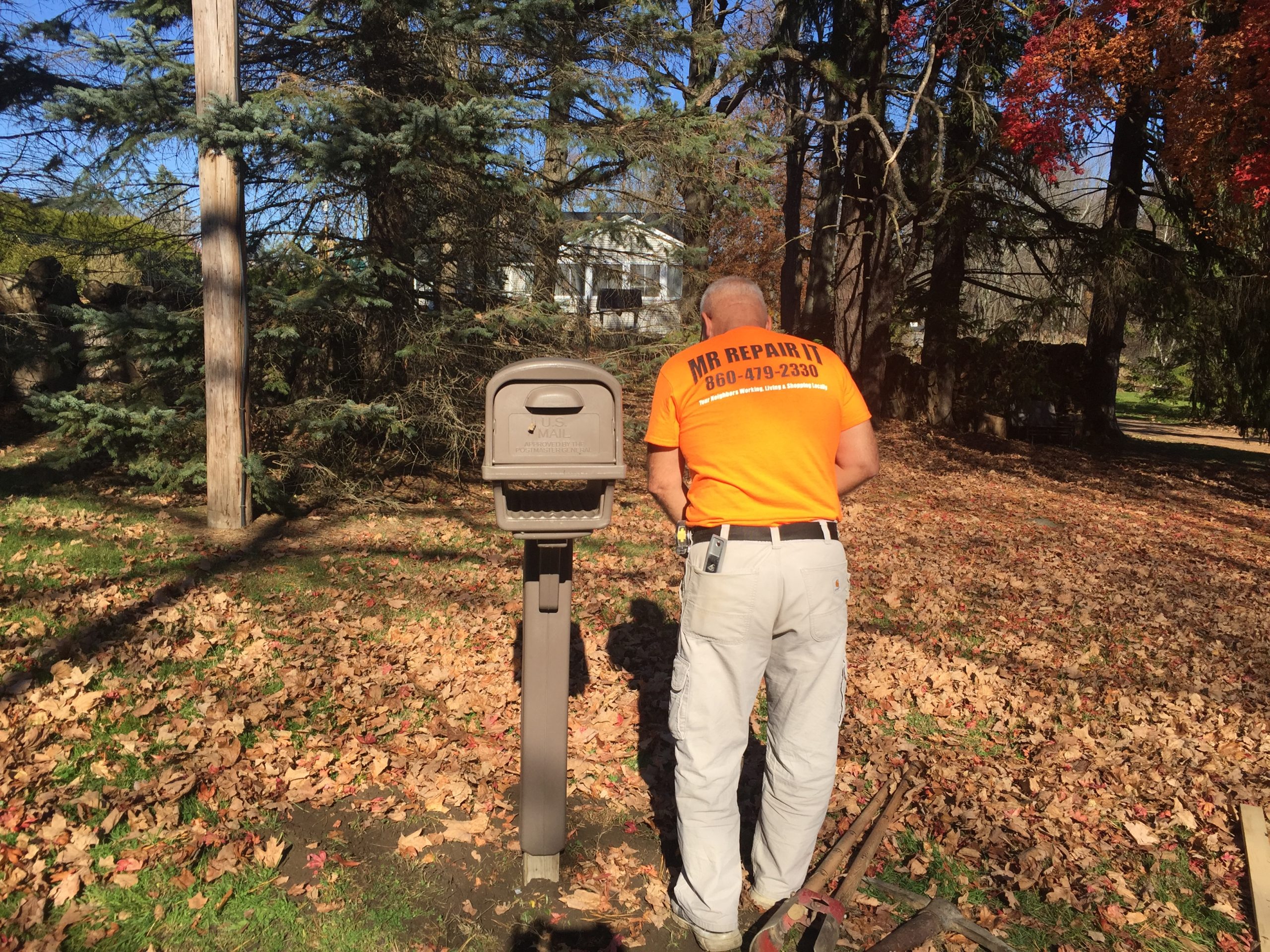
Repairing a Mailbox and Replacing a Mailbox

How to Install a Mailbox

Mailbox Repair and Installation Step-by-Step Instructions

If you want your Mailbox installed professionally, consider hiring Mr. Repair It for professional results. Have a Question? Call or Text us at 860-479-2330

Step 1: Assess the damage

– Examine the mailbox pole’s condition and determine the damage’s extent. Check if the pole is broken, rotten, or unstable. Also, inspect the mailbox to see if it needs replacing.

Step 2: Gather materials

– Collect all the necessary materials and tools for the repair. This may include a new mailbox, a new mailbox post (if required), a post-hole digger, a level, a shovel, screws or nails, a screwdriver or drill, and a hammer.

Step 3: Remove the old mailbox

– If the existing mailbox is damaged or needs replacement, remove it. Unscrew or remove any screws, bolts, or nails that secure the mailbox to the post. Carefully detach the mailbox and set it aside.

Step 4: Attach the new mailbox:

– Remount the post once the post is securely set in the ground. Cut a new Mailbox Mounting base position that and the new mailbox onto the post. Use screws or nails to attach the mailbox to the post securely. Ensure that the mailbox is level and properly aligned.

Step 5: Test and finalize

– Give the repaired mailbox a gentle shake to ensure it is firmly attached to the post. Double-check that the mailbox door opens and closes smoothly. If everything looks good, you’ve successfully repaired the mailbox plate and replaced the mailbox.

Now add your Name or House Number and mission accomplished.

Posted on

Turn your attic into storage space

Mr Repair It technician Converting Attic into Storage

Converting Attic into Storage

Here’s a step-by-step guide on cleaning, insulating, and adding a floor to an attic.

If this project is too complicated or you just don’t have the time consider hiring Mr. Repair It for professional results.


Step 1: Safety Precautions while Converting Attic into Storage

– Protect yourself during the process by using appropriate safety gear, such as gloves, goggles, and a dust mask.

– Ensure proper ventilation in the attic by opening windows or using fans if necessary.

Step 2: Clearing the Attic

– Remove any stored items or debris from the attic space. Sort and dispose of items that are no longer needed.

– Sweep or vacuum the attic floor to remove loose dirt and dust. Use a shop vacuum or a broom with an extended handle to reach all corners.

Have a Question? Call or Text us at 860-479-2330

Step 3: Inspect and Repair

– Inspect the attic for any signs of water leaks or damage. If you find any issues, address them before proceeding further. Repair any leaks and replace damaged materials.

Step 4: Sealing Air Leaks

– Identify and seal any air leaks in the attic. Common areas include gaps around pipes, vents, electrical wiring, and ceiling fixtures. Use caulk or expanding foam to seal these gaps, ensuring a tight seal.

Step 5: Installing Insulation

– Determine the appropriate type and amount of insulation for your attic. Standard options include fiberglass batts, blown-in cellulose, or spray foam insulation.

– Measure and cut insulation material to fit between the ceiling joists or roof rafters. Ensure a snug fit without compressing the insulation, as it reduces its effectiveness.

– Lay the insulation evenly across the attic floor or between the roof rafters, covering the entire area. Use staples or insulation supports to secure it in place.

Step 6: Vapor Barrier (if required)

– A vapor barrier may be necessary in regions with high humidity or when using certain types of insulation. Consult local building codes and insulation manufacturer guidelines to determine if a vapor barrier is required.

– If needed, install a vapor barrier by attaching plastic sheeting to the underside of the attic ceiling. Overlap the seams and use a staple gun or adhesive to secure them.

Step 7: Adding a Subfloor

– Determine the type of subfloor you want to install, such as plywood or oriented strand board (OSB). Next, measure the attic floor area to determine the required material.

– Cut the subfloor material into appropriately sized panels that fit between the joists. Leave a small gap of around 1/8 inch between panels to allow for expansion.

– Place the subfloor panels perpendicular to the ceiling joists and align the edges. Secure the panels to the joists using screws or nails, ensuring a sturdy and even surface.

Step 8: Finishing Touches

– Inspect the newly installed subfloor for any loose screws or nails. Tighten or replace as necessary to ensure a secure subfloor.

– Clean up any remaining debris or dust in the attic space. Dispose of waste materials properly.

– Consider adding additional features to improve attic functionality, such as lighting, electrical outlets, or access stairs/ladders. Remember to consult local building codes and regulations before starting the project. Additionally, seeking professional advice or assistance might be helpful, especially if you are unfamiliar with construction or insulation work.